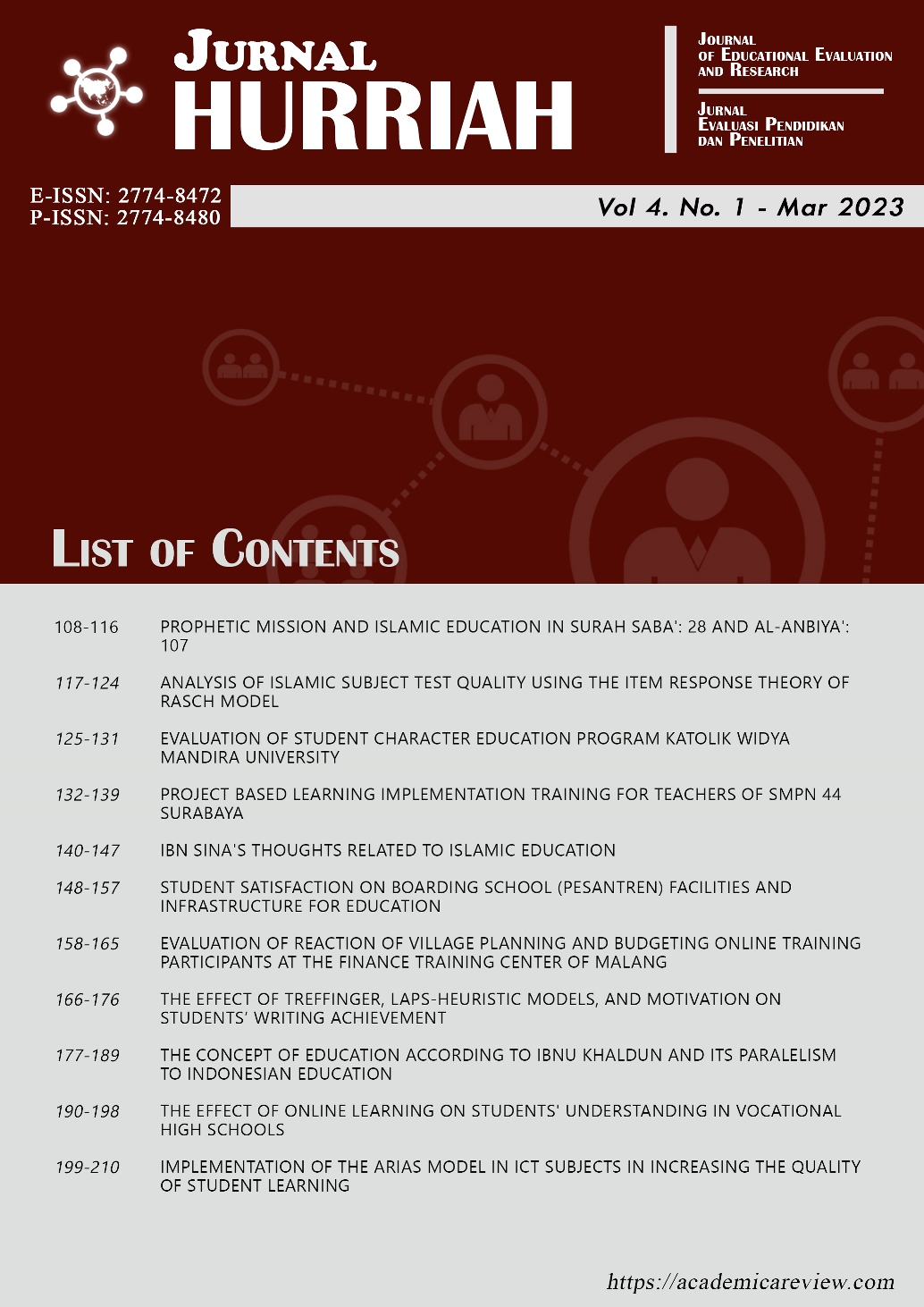
EVALUATION OF STUDENT CHARACTER EDUCATION PROGRAM KATOLIK WIDYA MANDIRA UNIVERSITY
DOI:
https://doi.org/10.56806/jh.v4i1.119Keywords:
Evaluasi program, Pendidikan karakterAbstract
This study aims to analyze and determine the effectiveness of the implementation of student character education programs at Widya Mandira Catholic University in terms of context, input, process and product variables. This research includes evaluative research, which evaluates the implementation of learning programs. In this study, analyzing the effectiveness of implementing learning with the CIPP model (context, input, process and product). Respondents in this study were 150 students. Data was collected using questionnaires, interviews, observations, documents and APKG. Data were analyzed by descriptive analysis. To determine the effectiveness of implementing the student character education program, raw scores were transformed into Z then into T-Scores then verified into the Glickman prototype. In connection with the findings of this evaluative study, the results of the analysis of the context, input, process and product variables respectively show a value of (+ + +-), and if converted into the Glickman quadrant, the quality of the effectiveness of implementing student education programs at Widya Catholic University Mandira in 2021, classified as effective. To ensure that this program is more effective, the substance that needs to be refined is the product factor
Downloads
References
Arikunto,Suharsimi. 2001. Dasar-dasar Evaluasi Pendidikan (edisi revisi). Jakarta: Bumi Aksara.
Arikunto,Suharsimi. 2002. Presedur Penelitian Suatu Pendekatan Praktek. Edisi revisi V. Jakarta: PT. Rineka Cipta.
Arikunto,Suharsimi. 2004. Evaluasi Program Pendidikan. Jakarta: Bumi Aksara.
Cepi Safruddin Abdul Jabar. 2007. Evaluasi Program Pendidikan. Jakarta: Bumi Aksara
BSNP. 2006. Peraturan Pemerintah
Nomor 19 Tahun 2005
Tentang Standar Nasional Pendidikan. Jakarta: BSNP.
Boone, Louis E. dan Kurtz, David L .(1992) Manajement. Mc. Graw – Hill Book.
Candiasa. 2010. Statistik Univariat dan Bivariat Disertai Aplikasi SPSS. Singaraja:Unit Penerbitan Undiksha.
Depdikbud. 1989. Kamus Besar Bahasa Indonesia. Jakarta: Balai pustaka.
Degeng, I.N.S. 2000. Ilmu Pengajaran Taksonomi
Variabel. Jakarta: Depdiknas Dikti. P2LPTK.
Danim, Sudarwan. 2003. Agenda Pembaruan Sistem Pendidikan. Yogyakarta:
Pustaka Pelajar.
Depdiknas. 2003. Undang Undang RI No 20 Tahun 2003 Tentang Sistem Pendidikan Nasional, Jakarta
Depdiknas, 2004. Standar Kompetensi
Guru Sekolah menengah
Pertama. Jakarta: Depdiknas.
Daryanto, H.M. 2006. Administrasi Pendidikan. Jakarta: Rineka Cipta.
Depdiknas, 2006. Undang-Undang RI No. 14 Tahun 2005 Tentang Guru dan dosen. Jakarta: BP Cipta Jaya.
Dahlan,D. 2006. Psikologi Perkembangan Anak Remaja. Cetakan ke tujuh, PT. Remaja Rosdakarya Offset. Bandung.
Dantes. 2007. Metodelogi Penelitian
Untuk Ilmu Sosial dan Humaniora. Singaraja:
Undiksha.
Gomes, F.C. 1997. Manajemen Sumber Daya manusia.
Yogjakarta: Andi Offset
Hamalik, Oemar. 2004. Psikologi Belajar dan Mengajar. Bandung: Sinar Baru Algesindo.
Hoy, K.W. & Miskel, C.G. 1987 Education Administrasion: Theory, Research and Practice. New York: Random Home.
Handoko, T. Hani; Subagis, Pengestu. (1995). Dasar - dasar Operations Reseesrch. Asri BPFE – UGM.
Handoko, T. H. (2003) Manajemen,Edisi 2.Yogyakarta: BPFE – Yogyakarta.
Henry Fayol, (1975) Prinsip – prisip dan Praktek Manejemen: Longman.
Koontz, Harold dan O` Donnel, (1966) Principles Of Manajement: Mc. Gram Hill Book.
Downloads
Published
How to Cite
Issue
Section
License
Copyright (c) 2023 Yustina Lawung

This work is licensed under a Creative Commons Attribution 4.0 International License.